What Is Cretan Cuisine?
What makes Cretan food different from the rest of Greek cooking: wild greens, olive oil, barley rusks, staka and raki, the dishes to know, and where to learn to cook them.
Cretan cooking is Greek cooking with less fuss and more olive oil. It grew from what a mountain island could produce: olives, barley, wild greens, sheep and goats, honey, grapes and a long coastline. Very little of it involves a recipe book.
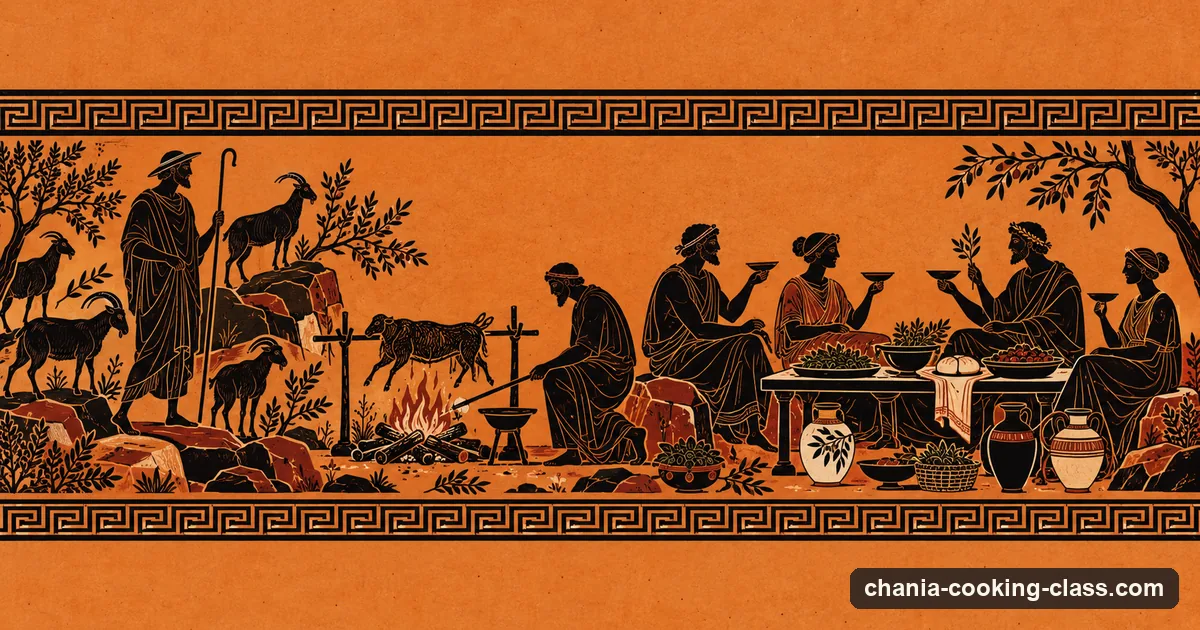
Cretan food vs Greek food
Most of what visitors call Greek food is eaten in Crete too, but the island has habits of its own:
- Wild greens: Cretans forage dozens of edible greens, boil them and dress them with oil and lemon. Stamnagathi, a spiny chicory, is the prized one.
- Barley rusks: twice-baked barley bread, kept for months, softened with water and oil and topped to make dakos.
- Dairy: soft mizithra, hard graviera and staka, a rich product of boiled sheep’s or goat’s cream that finishes pilafs and eggs.
- Snails: a Lenten food that became a favourite, fried with rosemary and vinegar.
- Raki: the island’s grape spirit, called tsikoudia, poured as a welcome and as a goodbye.
- Olive oil in quantity: it is the cooking fat, the dressing and often the sauce.
Why the Cretan diet is famous
The Seven Countries Study, which began in the late 1950s, followed groups of middle-aged men in several countries. The men from Crete stood out for their low rates of heart disease, and their diet of vegetables, pulses, bread, olive oil and little meat became the model for what is now called the Mediterranean diet. Island life has changed since, but the traditional table is still there in villages and family kitchens.
Dishes worth knowing by name
- Dakos: the rusk, tomato and cheese salad that starts many meals.
- Kalitsounia: small cheese or greens pies, baked or fried.
- Gamopilafo: wedding pilaf in meat broth with staka.
- Antikristo: lamb roasted slowly on stakes around an open fire, a shepherds’ dish.
- Kleftiko: lamb sealed and slow-cooked, the “thieves’ dinner” one Chania family class still makes in a wood-fired oven.
- Loukoumades: honey-soaked fritters for after.
The what to eat in Chania list says where to find them in town.
Learning it properly
Reading about Cretan food goes only so far. The quickest way into it is a kitchen: you see how much oil goes in, how dough for kalitsounia should feel, and why the greens are picked that morning. The White Mountains cooking class (4.9 from 741 reviews, from US$124 (GetYourGuide, checked October 2026)) starts in the vegetable garden, walks up to a shepherd’s enclave to talk olive harvests, then cooks a traditional meal you eat with local wine and cheese. Pickup from Chania is included and you leave with the recipes.
Book Your Experience
Check Availability & Prices
Select your preferred date and time. Cancel up to 24 hours in advance for a full refund.
For a home-kitchen alternative, the Chania Cooking Class in Nerokourou (4.9 from 128 reviews, from US$124 (GetYourGuide, checked October 2026)) cooks lamb in a wood-fired stone oven, with dolmades and kalitsounia; transport is not included. Compare both in Chania cooking class prices.

Cook Cretan food in the White Mountains
A small-group class with garden ingredients, the stories behind each dish, and the meal with wine at the end.
Check dates